
Product Positioning
MPB-1523 (IOP Injection) is a polyethylene glycol-modified iron oxide nanoparticle MRI contrast agent independently developed by MegaPro Biomedical as a new drug under the 505(b)(1) pathway. It is primarily intended for the imaging evaluation of focal liver lesions. Through uptake of the iron oxide nanoparticles by hepatic Kupffer cells, the product creates contrast between normal liver tissue and lesions on MRI, supporting lesion visualization and interpretation.
Product Features
● Iron Oxide Nanoparticle Platform
Uses polyethylene glycol-modified iron oxide nanoparticles. It is gadolinium-free and exhibits high macrophage uptake.
● Liver-Specific Imaging
Enhances image contrast between normal liver tissue and focal lesions through Kupffer cell uptake.
● Potential for Multi-Sequence Imaging
Clinical studies have generated T2/T2* imaging data, and the potential applications of dynamic-phase imaging and other sequences continue to be evaluated.
● Clinical Development Foundation
Phase I and Phase II clinical trials have been completed. Planning and applications for the Phase III clinical trial are progressing in accordance with feedback from regulatory authorities.
● Clinical Need
Liver cancer and liver metastases may lack obvious symptoms at an early stage, making imaging an important tool for clinical evaluation. Current ultrasound, computed tomography, and gadolinium-based MRI contrast agents each have their own applicable settings and limitations. Based on hepatic Kupffer cell uptake, MPB-1523 is being developed to provide differentiated imaging information for liver lesions and to explore its potential value in evaluating small lesions, portal vein invasion, and primary or secondary liver tumors.
Clinical Development and Research Findings
● Phase II clinical trial completed: The study enrolled subjects with suspected hepatocellular carcinoma to evaluate the imaging performance and safety of MPB-1523.
● Study observations: In the Phase II trial, two drug-related adverse events were reported: Grade 1 rash and Grade 2 pruritus. The incidence of drug-related adverse events was 3.84%.
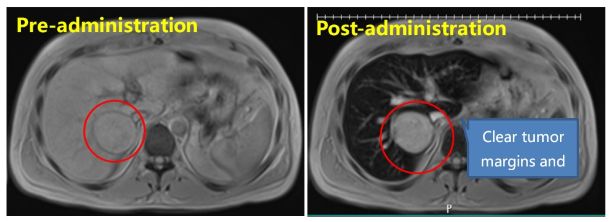
● Imaging findings: The true positive rate in the Phase II trial was 96%. Retrospective image analysis showed improved lesion-boundary and contrast-enhancement scores after administration compared with pre-administration images.
● Evaluation of small lesions and invasion: Existing clinical imaging cases show that MPB-1523 can visualize hepatocellular carcinoma lesions smaller than 1 cm and has generated images related to portal vein invasion. These findings remain subject to further confirmation in a subsequent Phase III clinical trial.
● Publication: Results from the MPB-1523 Phase II clinical study have been published in the Journal of Magnetic Resonance Imaging.
● Clinical Trial Information
Taiwan: https://e-sub.fda.gov.tw/ClinicalTrialInfo/home | Search keyword: "巨生"https://e-sub.fda.gov.tw/ClinicalTrialInfo/home
United States: https://clinicaltrials.gov/ | Search "巨生" and enter "Megapro" under Other Terms.https://clinicaltrials.gov/
Regulatory and Development Progress
● MegaPro Biomedical held a Type C Meeting with the U.S. Food and Drug Administration (FDA) in April 2026 and received the official meeting minutes in May 2026. The parties discussed manufacturing requirements and the clinical design of the MPB-1523 Phase III trial. The Company will advance subsequent trial planning and applications in accordance with FDA recommendations.
● In China, MegaPro Biomedical has obtained the meeting minutes from a communication meeting with the Center for Drug Evaluation (CDE) of the National Medical Products Administration. These minutes will serve as an important reference for the design and implementation planning of the subsequent Phase III clinical trial in China.
Next-Stage Development Direction
● Advance multinational, multicenter Phase III clinical development planning in the United States, China, and Taiwan.
● Focus the primary study population on patients with focal liver lesions and suspected primary or secondary malignant liver tumors.
● Continue evaluating lesion detection, image contrast, sensitivity, specificity, and clinical performance across different lesion sizes.
Important Notice: MPB-1523 is an investigational product and has not received marketing authorization in any country or region. This content is provided solely to present the Company's technology and R&D progress. It does not constitute product advertising, medical advice, or diagnostic or treatment recommendations. The product's safety and efficacy remain subject to review and approval by the relevant regulatory authorities.